On attached Brooklyn houses most roof leaks start at the party wall rather than the roof surface: failed counterflashing, cracked coping, or open mortar joints. The water travels inside the masonry and surfaces floors below. MLM Construction Group traces it free at (516) 713-9199.
The Line Nobody Owns
On an attached Brooklyn house the roof does not end at a gutter. It ends at a wall you share with the person next door, and that line is the single most common place we find water getting in.
The reason is structural. Two buildings that touch are still two buildings. They settle at different rates, they are heated differently, they were built in different years by different crews, and they move independently. Any roofing material carried rigidly across that line is being asked to span a joint that opens and closes with the seasons. It cracks, every time, and usually in the same place year after year.
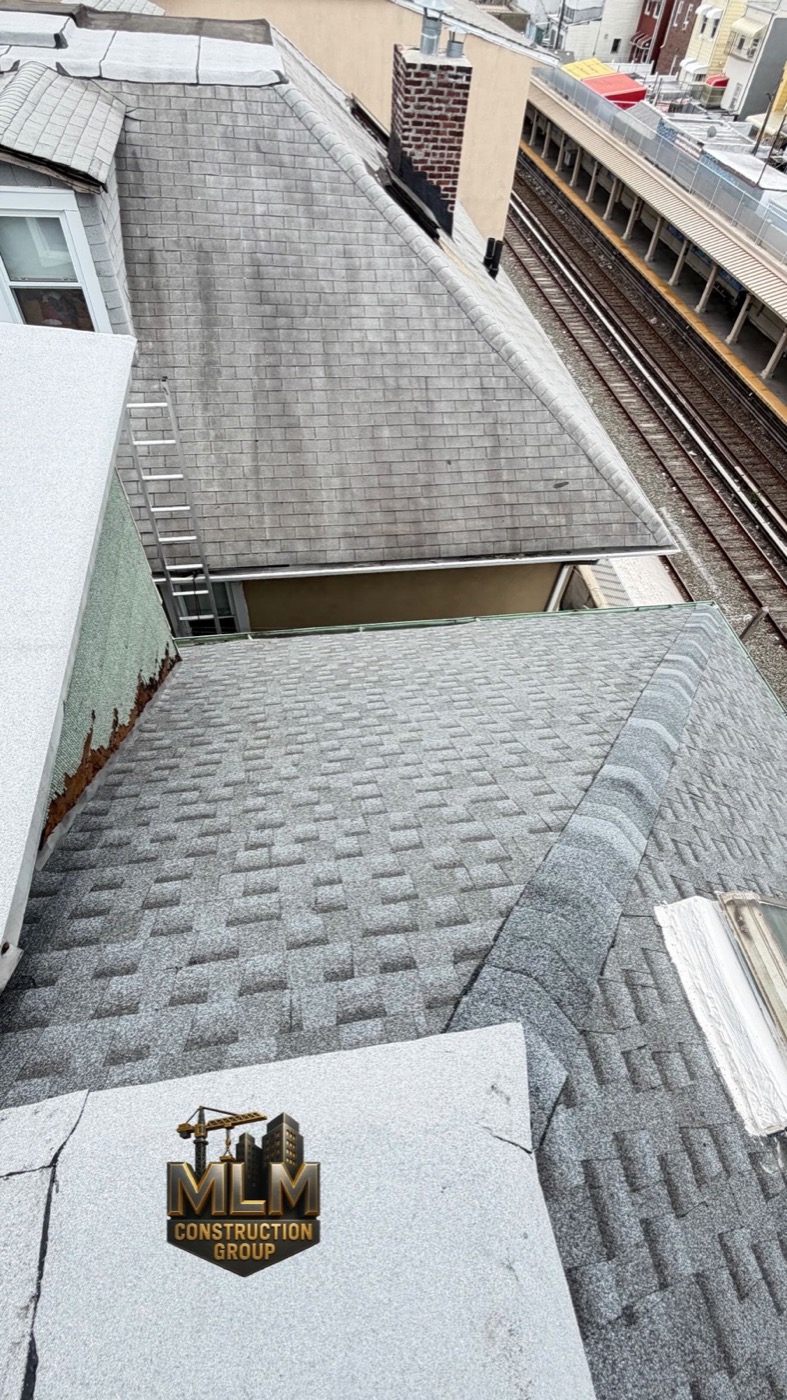
Four Ways a Party Wall Lets Water In
Failed or absent counterflashing. Where the roof meets the rising party wall there should be a two part detail: base flashing turned up the wall, and counterflashing set into a cut reglet in the masonry above it, lapping over the base. On a great many Brooklyn roofs there is simply a bead of roof cement smeared up the brick. It works for two or three years and then it does not.
Cracked or missing coping. The cap on top of the shared wall is the umbrella for the whole assembly. Once it cracks, water goes straight down inside the masonry, and the wall carries it until it finds a weak point, often on a ceiling two floors below and nowhere near the roof.
Open mortar joints in the wall itself. Brick that has not been repointed in forty years takes water in directly. Nothing you do on the roof surface fixes a wall that is absorbing water on its own.
Differential movement. The one nobody can eliminate, only allow for. The detail has to be able to move. Rigid cement will always lose to a joint that flexes.
Why It Gets Blamed on the Roof
Water that enters at a party wall travels inside the masonry before it appears. By the time it shows on a ceiling it can be several feet from the wall and a full floor below the roof. Homeowners see a ceiling stain, call a roofer, and the roofer patches the nearest roof surface. The stain comes back in the next heavy rain because the entry point was never touched.
We see roofs that have been patched three times around a stain that was always a coping problem. That is a lot of money for no change.
The Neighbour Problem
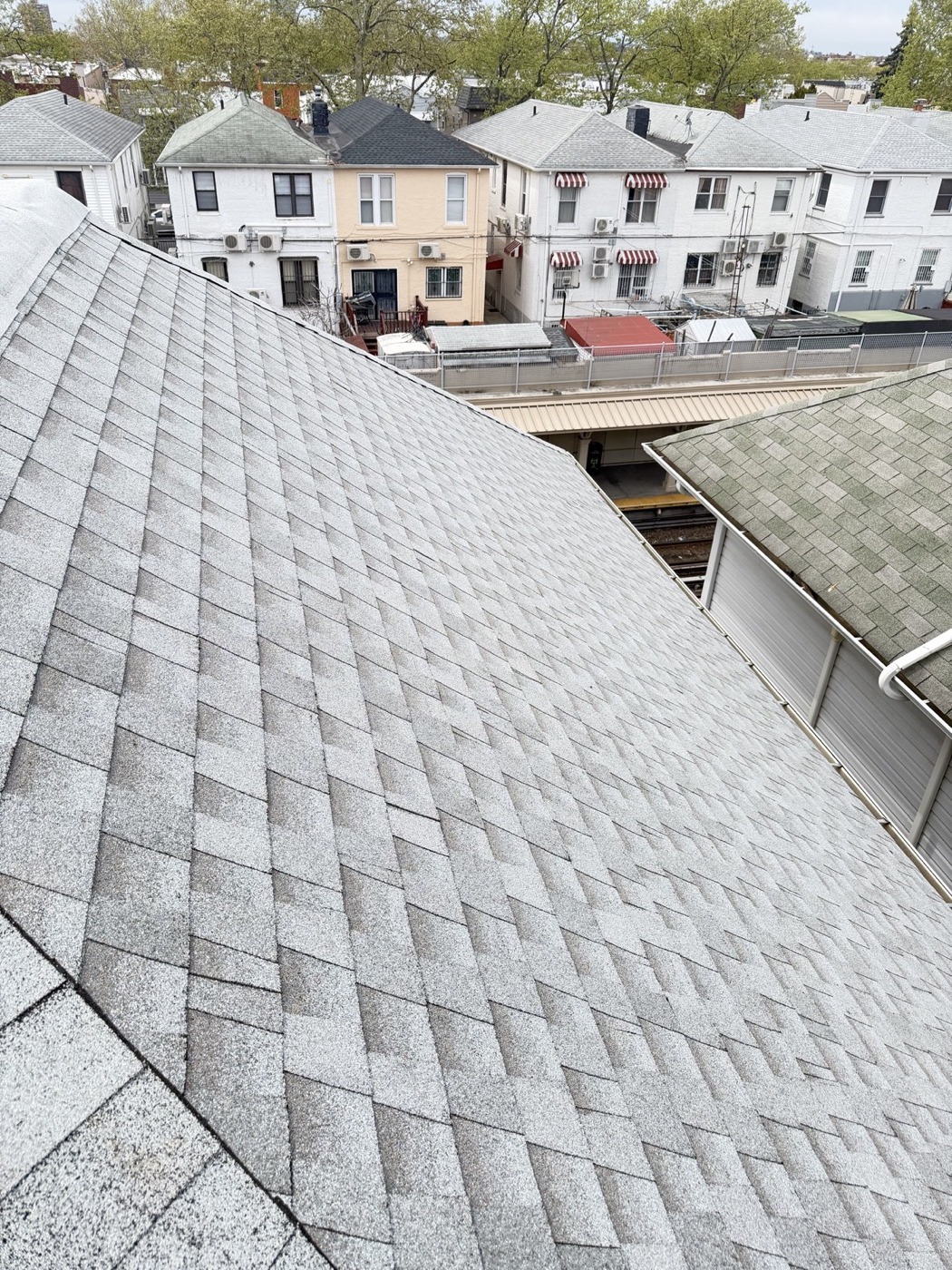
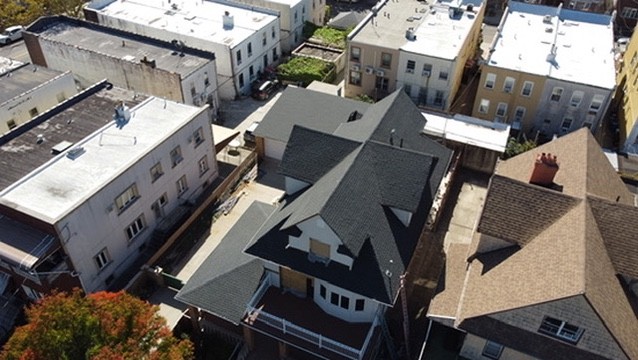
Here is the part that makes attached houses genuinely harder than detached ones. The coping sits on a wall you share. Doing the work properly often means working above, and sometimes from, the property next door.
Our experience is that this goes well when it is raised early and badly when it is discovered mid job. We tell owners to speak to the neighbour before the work is booked, not on the morning the crew arrives. In most cases the neighbour has the same problem on their side and is glad it is being dealt with. Where a shared coping is replaced, both sides benefit and the cost conversation is usually straightforward.
What does not work is treating the shared wall as if it stops at your property line. Water does not read deeds.
How to Check Yours
- Look at the coping from the roof. Cracks across the cap, open joints between sections, pieces that rock when pushed, or a cap that slopes toward the building rather than away.
- Look at where the roof meets the wall. If what you see is a smear of black cement rather than metal set into the brick, that is a temporary repair someone left as permanent.
- Look at the brick above the roof line. Mortar you can scratch out with a key is taking water on its own.
- Inside, track the stains. Stains that follow a line parallel to the shared wall, on upper floors, point at the party wall rather than the roof field.
What a Proper Repair Looks Like
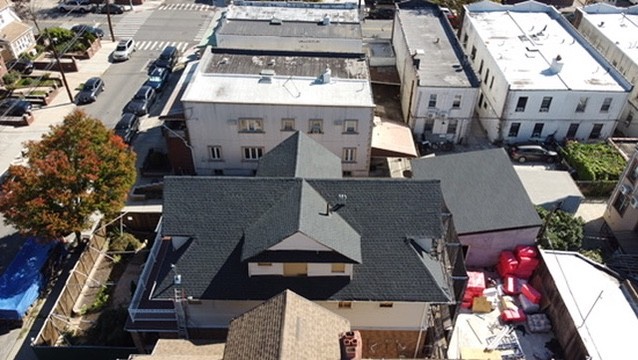
Cut a real reglet into the masonry and set counterflashing into it, rather than surface mounting metal and caulking the top edge. Turn the base flashing properly up the wall under it. Repoint the brick above the roof line where the mortar has gone, because flashing into failed mortar fails with it. Replace or reset cracked coping with the slope running away from the building and the joints detailed to move.
That is more work than a bucket of cement and it is the difference between a repair that holds for twenty years and one that holds until February. More on related details in roof flashing, the number one cause of Brooklyn leaks, parapet wall repair and brick pointing.
Frequently Asked Questions
Why does my ceiling leak when the roof was just replaced?
On an attached Brooklyn house it is usually the party wall. Water entering at failed counterflashing or cracked coping travels down inside the shared masonry and surfaces on a ceiling well below and often several feet away from the wall. A roof replacement that stopped at the edge of the membrane never touched the entry point, which is why the stain comes back in the next heavy rain.
What is counterflashing and how do I know if mine is wrong?
It is a two part detail. Base flashing turns up the wall from the roof, and counterflashing is set into a cut slot in the masonry above it and laps down over the base. If what you can see is a smear of black roof cement up the brick instead of metal set into the wall, that is a temporary repair that somebody left as permanent. It typically holds two or three winters.
Do I need my neighbour's permission to fix a party wall?
Often you need their cooperation rather than formal permission, because doing the coping properly usually means working above and sometimes from their side. Raise it before the job is booked rather than on the morning the crew arrives. In most cases the neighbour has the same problem on their half and is glad it is being addressed.
Can this be repaired without replacing the whole roof?
Usually yes, and that is the point of diagnosing it correctly. If the roof field is sound and the failure is at the wall, the work is counterflashing, repointing above the roof line and coping. That is a fraction of a roof replacement. We see roofs that were replaced because nobody identified a coping problem, which is an expensive way to not fix a leak.
How much does party wall roof work cost in Brooklyn?
Counterflashing a roof to wall run typically costs $600 to $1,800 depending on length and access. Repointing the brick above the roof line runs $12 to $28 per square foot of wall. Resetting or replacing cracked coping is usually quoted per linear foot. The total is almost always well below a roof replacement, which is the comparison that matters.
Why does the same spot crack again every year?
Because two attached buildings move independently. They settle differently, they are heated differently and they were built in different years. Any rigid material carried across that line is spanning a joint that opens and closes with the seasons. The repair has to allow for movement. Filling it harder each year is why the same crack reopens every spring.
Find the Leak Before You Replace the Roof
We trace water to its actual entry point and photograph what we find, so you are not paying for a roof when the problem is a coping. Brooklyn, Queens, Manhattan, the Bronx, Staten Island and Nassau County. Licensed, insured & Google Guaranteed.
📞 (516) 713-9199 Get Free Estimate