A Brooklyn flat roof gives plenty of warning before it fails, but the warnings are all on the roof where nobody looks. Six checks before the first freeze: drains, ponding, seams, parapet and coping, every penetration, and what sits above the roof. Free inspection at (516) 713-9199.
Walk Your Roof Before the First Freeze
A Brooklyn flat roof gives you plenty of warning before it fails. The problem is that the warnings are all on top of the building, where nobody goes between May and the first leak.
Twenty minutes in October tells you what January is going to do. Here is what to look at, in the order that matters.
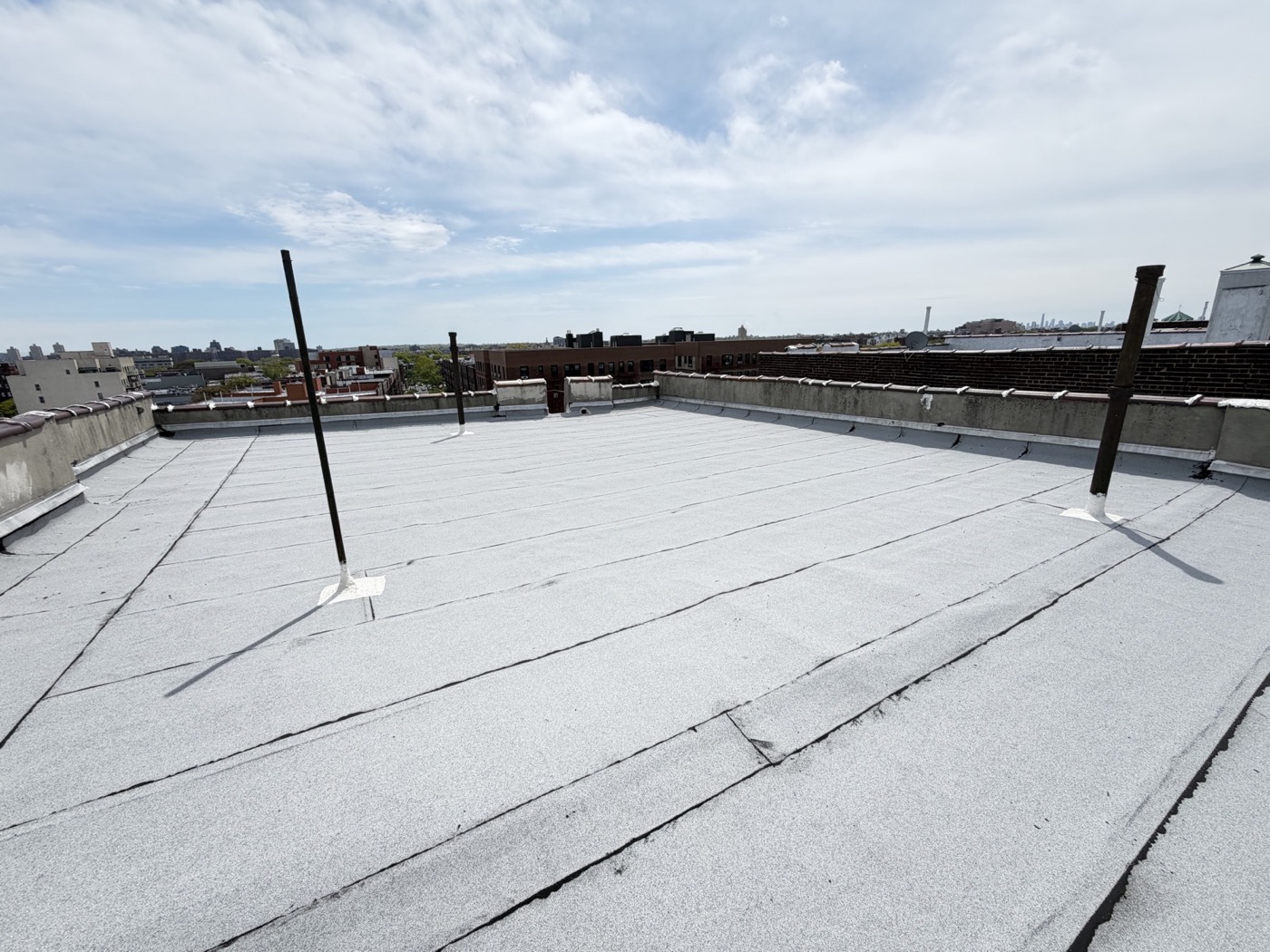
1. The Drains, Before Anything Else
This is the single highest value thing on the list and it costs nothing. Clear every drain and scupper of leaves, grit and whatever the summer deposited. A blocked drain in October becomes standing water in November and ice in December, and ice on a flat roof is both weight and a wedge.
While you are there, pour a bucket of water near each drain and watch where it goes. If it sits, you have either a blockage or a slope problem, and knowing which one before winter is worth a great deal.
2. Water That Is Still There Two Days After Rain
Ponding is the diagnostic that tells you the most. Water standing more than forty eight hours after rain means the drainage is not working, either because it is blocked or because the roof has lost its slope from a settled deck or compressed insulation.
The weight matters more than people expect. An inch of standing water across a thousand square feet is over five tons. Add a snow load on top of that and you are asking the structure a question you did not intend to ask.
3. Every Seam and Every Lap
Flat roofs do not fail in the middle. Walk the seams and look for laps that have opened, edges lifting, or any place the membrane has shrunk back and pulled at a corner. On modified bitumen look for cracking at the laps. On EPDM look at the perimeter, because shrinkage pulls there first. On TPO look at the welds, because a weld run at the wrong temperature looks fine for two years and then opens.
4. The Parapet and the Coping
On a Brooklyn row house roof the parapet surrounds you on three sides, which means far more linear feet of roof to wall transition than the square footage suggests. Look for cracked coping, open joints between coping sections, and any place the base flashing has pulled away from the wall.
This is where we find more water entry than anywhere else, and the water that enters here does not drip onto the roof. It runs down inside the wall and appears on a ceiling two floors below, which is why it so often gets misdiagnosed.
5. Every Penetration
Count them: vent stacks, pipe boots, AC curbs, satellite mounts, conduit, anything fastened through the membrane. Each one is a hole with its own flashing ageing at its own rate. Cracked rubber collars around vent pipes are the single most common leak source we find on any roof type, and they are cheap to replace before they matter.
6. What Is Above the Roof
Overhanging branches that will come down under ice. Gutters on a neighbouring higher roof discharging onto yours. A chimney or bulkhead whose flashing has lifted. Anything above the roof that can deliver water or weight onto it belongs on the list.
What to Do With What You Find
Clear drains and cut branches yourself. Cracked collars, open seams and lifted flashing are small repairs now and large ones after a freeze, because water that gets into the assembly expands when it freezes and widens whatever let it in.
Ponding from a slope problem is a bigger conversation and usually not an emergency, but you want to know about it before you are shovelling snow off a roof that already holds water.
One thing to settle before snow arrives: decide now whether you will clear snow and how. More on that in snow on a flat roof, when to clear it. Related: ponding water, vent and pipe boot leaks, and the full winter prep checklist.
Frequently Asked Questions
What is the most important thing to check on a flat roof before winter?
The drains, and it costs nothing. Clear every drain and scupper of leaves and grit, then pour a bucket of water near each one and watch where it goes. A blocked drain in October becomes standing water in November and ice in December. Ice on a flat roof is both dead weight and a wedge that opens seams.
How long is it normal for water to stand on a flat roof?
Up to about forty eight hours after rain. Anything still there after that means either a blocked drain, which is cheap and immediate to fix, or lost slope from a settled deck or compressed insulation, which is a far bigger job. The distinction matters enormously for cost and it is settled by inspection rather than by guessing.
How much does standing water actually weigh?
An inch of water across a thousand square feet is over five tons. That alone is usually within what the structure can carry, but add a snow load on top of a roof that already ponds and you are asking the building a question you did not intend to ask. It also ages the membrane faster than the rest of the roof.
Where do flat roofs usually leak?
Almost never in the middle. Failures start at seams and laps, at the parapet and roof to wall transition, at drains, and at penetrations such as vent stacks, pipe boots and AC curbs. A cracked rubber collar around a vent pipe is the single most common leak source we find, and it is cheap to replace before it matters.
Why does the leak show up far from the roof?
Because water entering at a parapet does not drip onto the roof. It runs down inside the masonry and surfaces on a ceiling two floors below, often several feet from the wall. That is why parapet leaks get misdiagnosed as roof failures and why roofs get replaced without the leak stopping.
Can repairs still be done once it gets cold?
Heat welded work and most flashing repairs, yes. Adhered systems are the problem, because their adhesives generally need above 40 degrees to bond. If something needs doing in January we either change the attachment method or dry it in properly and complete it when conditions allow, rather than installing something that will not bond and calling it finished.
Free Pre Winter Flat Roof Inspection
We walk the roof, clear and test the drains, photograph every seam, penetration and coping joint, and give you a written list split into fix now and watch. Brooklyn, Queens, Manhattan, the Bronx, Staten Island and Nassau County.
📞 (516) 713-9199 Get Free Estimate