Roofing continues through a Brooklyn winter, but below about 40 degrees shingles stop self sealing and have to be hand sealed one at a time. MLM Construction Group opens one section at a time and dries it in before stripping the next. Free inspection at (516) 713-9199.
Roofing Does Not Stop in November. It Changes.
Every autumn somebody tells a homeowner that roofing season is over. It is not true, and the people saying it are usually either fully booked or about to install something in conditions it was never designed for.
What is true is that below about forty degrees the work changes in specific, well documented ways. Materials behave differently. The working day gets shorter at both ends. A competent crew adjusts for all of it. A crew that does not adjust will hand you a roof that looks finished in December and starts shedding shingles in the first February windstorm.
Here is what actually changes, so you can tell which one you are dealing with.
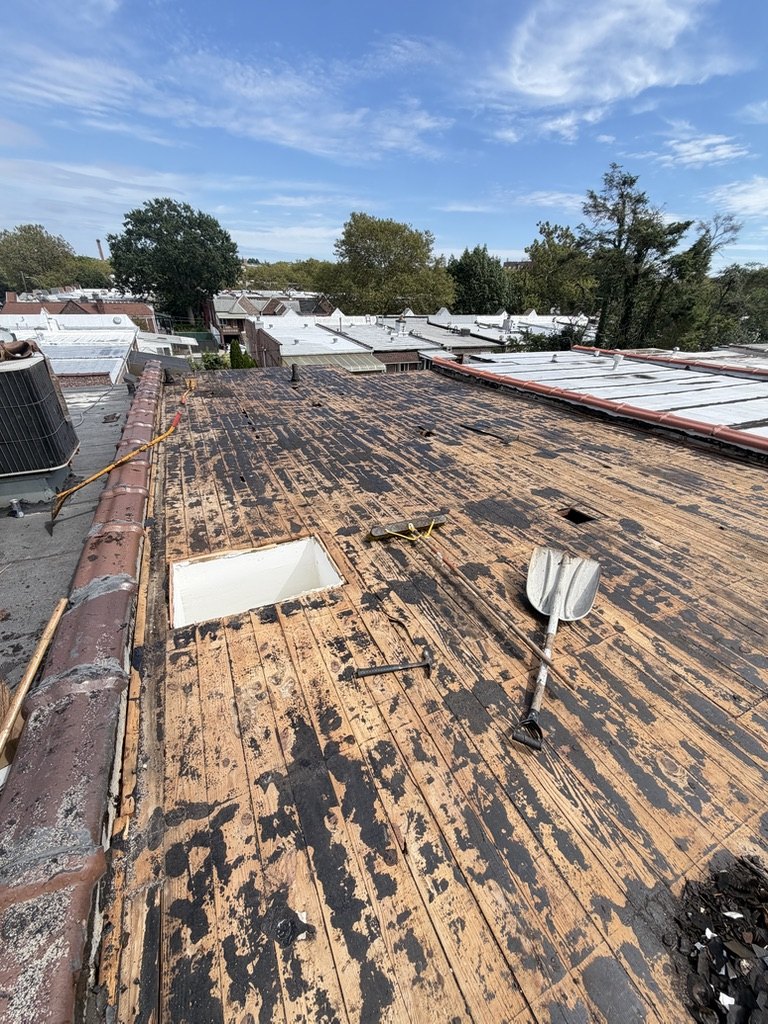
Asphalt Shingles Stop Sealing Themselves
This is the single most important thing to understand about cold weather roofing, and it is the one most often skipped.
Every architectural shingle has a strip of factory applied adhesive across it. After installation, sun and warmth soften that strip and the shingle above bonds down onto it. That bond is what makes a roof a sealed surface instead of a stack of loose tabs. It is what the wind rating depends on.
Below roughly forty to fifty degrees that strip does not soften and the shingles do not seal. They sit there unbonded, waiting for spring. Which means a roof installed in December has no real wind resistance until March.
The manufacturers are completely open about this. GAF and Owens Corning both instruct that in cold weather each shingle should be hand sealed with a spot of asphalt roof cement under the tab. It is slow, it adds labour, and it is not optional. When you are getting quotes in November and December, ask directly whether hand sealing is included. The answer tells you a great deal about the contractor.
Cold Shingles Crack
Asphalt gets brittle as it gets cold. A shingle that bends easily at seventy degrees will crack when you fold it over a hip or a ridge at thirty five. You see it most at ridge caps, valleys and any detail that requires bending the material.
There are real ways to manage it. Keep the bundles somewhere warm and bring up only what the crew will use in the next hour. Score and bend rather than forcing. Slow down on the nail gun, because brittle shingles and cold hard decking produce over driven and under driven nails, and both of those are future leaks.
None of this is complicated. It just takes a crew that knows to do it and is not racing the daylight.
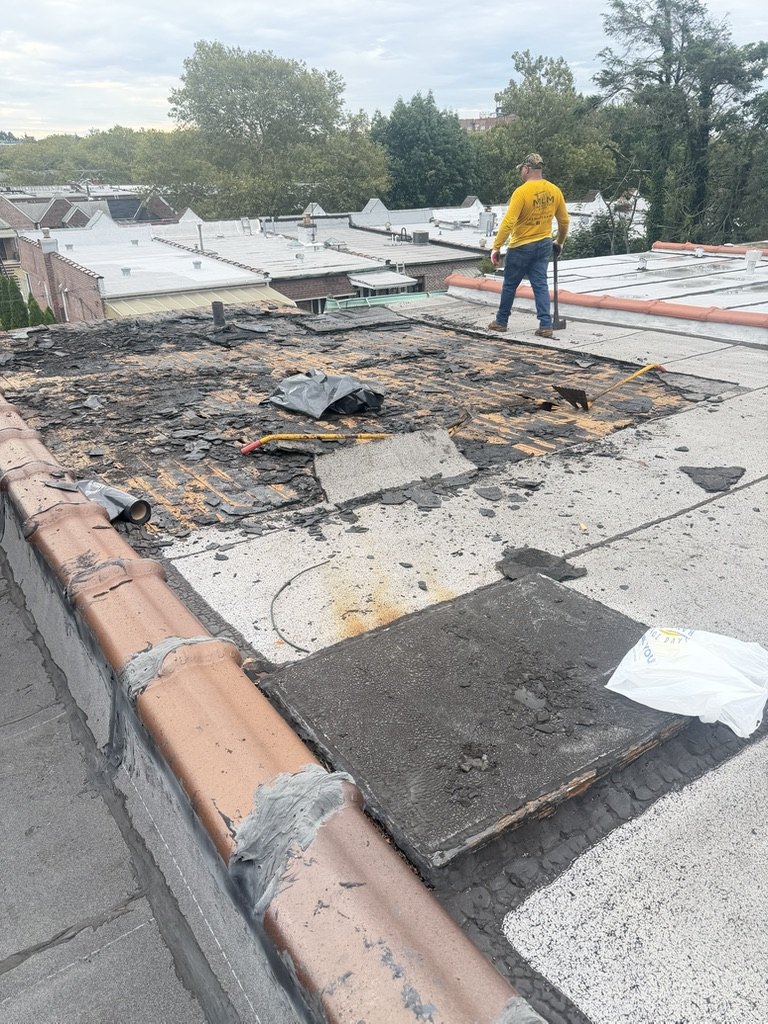
Flat Roofs: What Works Cold and What Does Not
Most Brooklyn row houses have a flat or low slope roof, so this is the part that matters for the majority of this borough.
Torch applied modified bitumen works in the cold. The torch brings the material to its own working temperature regardless of the air. The real constraint is not temperature, it is moisture. The deck must be genuinely dry and completely free of frost. You cannot torch over frost, and you cannot trap moisture under a membrane and expect it to behave.
Self adhered peel and stick has a hard floor. These membranes typically need around forty to fifty degrees to bond, and they need a primed, dry surface. Below that the adhesive simply does not grab. A peel and stick roof installed too cold can look perfect on the day and lift at the laps months later.
Cold adhesives for EPDM have minimum application temperatures too. Those numbers are printed on the pail. They are not suggestions and they are the first thing a manufacturer looks at on a warranty claim.
So on a cold Brooklyn flat roof the honest answer is usually torch applied modified bitumen, installed on a dry frost free deck, in a short and carefully chosen window.
The Working Day Gets Shorter at Both Ends
This is the part nobody puts in a brochure and it affects your schedule more than anything else.
In October a crew can be working by seven thirty. By late November the deck is frosted at seven thirty and nothing can go down until it has burned off, which often means a ten o'clock start. At the other end the light is gone by half past four. A nine hour working day in September is a five hour working day in December.
That has one direct consequence for how the job is run: we open far less roof at a time. Instead of stripping the whole surface in the morning and covering it by evening, we take one section, strip it, inspect the deck, replace what is rotten and dry it in completely before touching the next one. It means more days on site. It also means your house is never sitting open under a tarpaulin when a cold front arrives overnight.
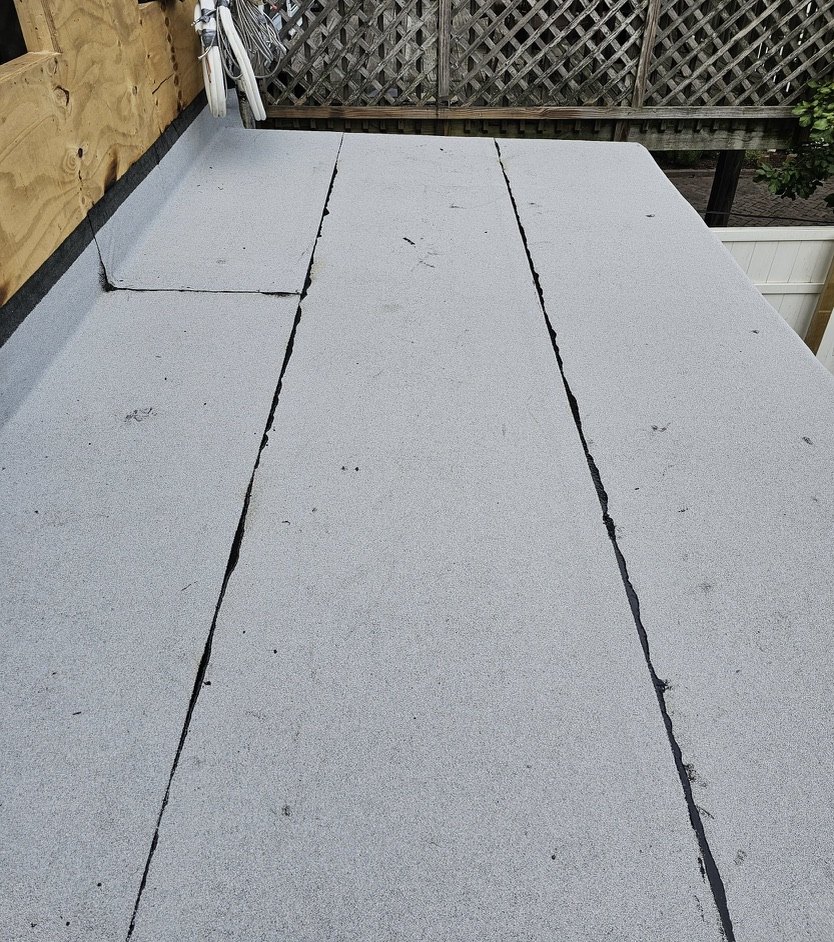
What We Will Not Do in the Cold
There is a line, and we would rather tell you where it is than pretend it does not exist.
We will not install a self adhered membrane below its rated temperature and tell you it is fine. We will not shingle without hand sealing. We will not work over frost or a wet deck. And we will not open more roof in an afternoon than we can genuinely close before dark.
If the forecast means a job cannot be done properly, we say so and we schedule it for when it can. A roof that goes on in the wrong conditions is a roof you pay for twice.
So Should You Wait for Spring?
Only if the roof will let you. That is the whole question.
If it is intact and you simply want it replaced, spring is more comfortable, the days are longer and the job goes quicker. Nothing wrong with waiting.
If it is already leaking, waiting until April means four or five months of water running into the structure through the freeze thaw season, which is the hardest part of the year on a building. Wet insulation stops insulating. Wet decking rots. A plank deck that needed two sheets replaced in October can need a dozen by March, and you pay for all of them.
The sensible middle path, when the budget or the calendar will not stretch, is a proper dry in now and a full replacement in spring. That is a real option and we will quote it honestly as one. Related reading: the last good week to replace a roof, the October flat roof checklist, and what a full replacement actually involves.
Frequently Asked Questions
Can you install a roof in Brooklyn in winter?
Yes, with adjustments. Torch applied modified bitumen works in cold weather provided the deck is dry and frost free. Asphalt shingles can be installed but each one must be hand sealed with roof cement, because below roughly forty degrees the factory adhesive strip will not bond on its own. Self adhered membranes are the ones to avoid in the cold.
Why do shingles need hand sealing in cold weather?
Because the factory adhesive strip on each shingle is activated by sun and warmth. Below roughly forty to fifty degrees it never softens, so the shingles stay unbonded and the roof has no real wind resistance until spring. GAF and Owens Corning both instruct hand sealing each shingle with asphalt roof cement in cold conditions. Ask whether a winter quote includes it.
What temperature is too cold to roof?
There is no single number, it depends on the material. Self adhered peel and stick membranes generally need around forty to fifty degrees to bond. Shingles can go on colder but require hand sealing and careful handling because asphalt turns brittle. Torch applied modified bitumen is the most tolerant. Frost on the deck stops all of it regardless of air temperature.
Does a winter roof installation take longer?
Usually yes. Frost on the deck pushes the start back to mid morning and darkness ends the day by half past four, so a nine hour day in September becomes about five in December. We also open much less roof at a time so every section is dried in before the next is stripped. More days on site, but the house is never left open overnight.
Should I wait until spring to replace my roof?
If the roof is intact and not leaking, waiting is perfectly reasonable and the work goes faster in warm weather. If it is already leaking, waiting means four or five months of water in the structure through the freeze thaw season. Decking that needed two sheets replaced in October can need a dozen by March.
Can you just patch it now and replace it in spring?
Yes, and it is often the right call when the budget or the calendar will not stretch. A proper dry in stops the water getting into the structure over winter and protects the decking and insulation, then the full replacement happens in better conditions. We will quote it honestly as an option rather than pushing the larger job.
Free Roof Assessment Before the Weather Turns
We will tell you plainly whether your roof can wait until spring or whether it needs to be dried in now. If a winter installation is the right call we explain exactly what we do differently in the cold and what it adds to the schedule. Brooklyn, Queens, Manhattan, the Bronx, Staten Island and Nassau County.
📞 (516) 713-9199 Get Free Estimate