A sharp crack from the roof on a cold night is thermal contraction, not damage: the structure shrinks as the temperature drops 20 to 30 degrees overnight and releases all at once. MLM Construction Group checks four noises that are not normal. Free inspection at (516) 713-9199.
It Is Almost Always the Temperature, Not the Roof
The first properly cold night of the year, somewhere around two or three in the morning, the house makes a noise. A single sharp crack from above the ceiling, loud enough to wake you. Then nothing. Then another one twenty minutes later.
Almost everybody assumes something broke. In the overwhelming majority of Brooklyn houses, nothing broke. What you are hearing is the roof structure changing size.
Wood, steel and asphalt all expand when they warm and contract when they cool, and they do it at different rates. During the day the sun hits the roof and the deck warms up and grows. Overnight the temperature drops twenty or thirty degrees and everything shrinks back. The pieces are nailed together, so they cannot move freely. They hold, hold, hold, and then let go all at once with a crack.
This is why you hear it on the first cold night and not in September. It is not the absolute cold, it is the size of the swing.
Why Older Brooklyn Houses Are Louder
Our building stock makes this worse than it is in a new build.
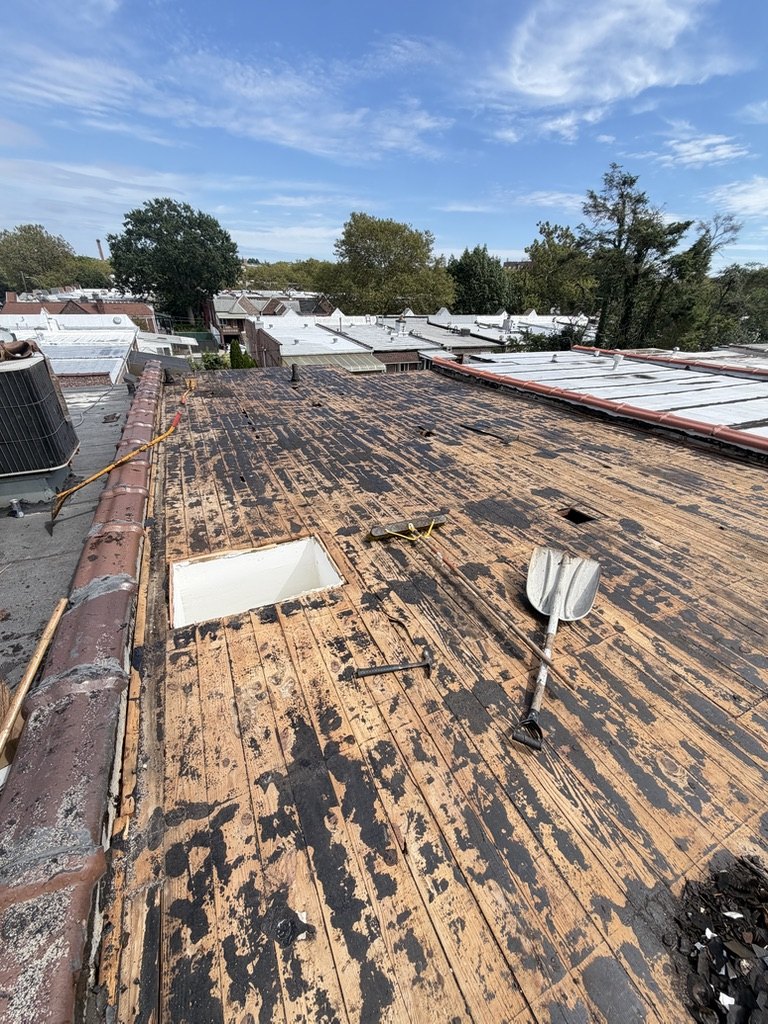
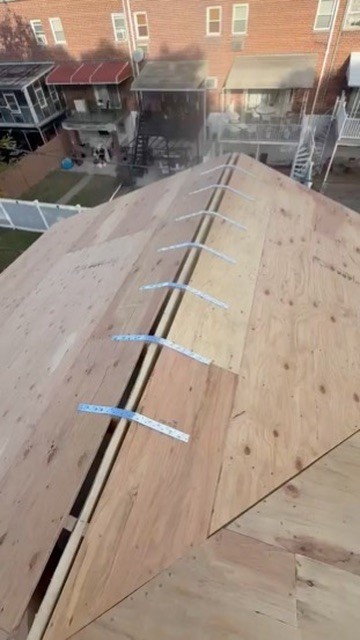
A lot of the row houses here still have the original plank deck: individual boards laid across the rafters rather than sheets of plywood. Every board is a separate piece that moves on its own, and every board has its own nails. A plywood deck is one large panel with far fewer independent joints, so it is noticeably quieter.
Then there is the party wall. On an attached house the roof structure is tied into masonry you share with the neighbour, and masonry and wood move at completely different rates. That junction is a reliable source of noise, which is also why it is a reliable source of leaks, something we covered separately in leaks at the shared wall.
Old nails matter too. A cut nail from the 1920s that has been working loose for decades moves further in its hole before it binds, and a longer movement makes a louder noise.
The Noises That Are Normal
Ranked roughly by how often we get asked about them.
A single sharp crack, late at night, in cold weather. Thermal contraction. The classic. Usually loudest between midnight and dawn because that is when the temperature falls fastest.
A series of ticks or pops as the sun comes up. The same thing in reverse. The sun hits one slope, that side warms and expands while the shaded side has not moved yet, and the structure adjusts.
A low groan when the wind gets up. The frame flexing. Normal on any tall narrow house, and Brooklyn is full of tall narrow houses.
A dull thud after a snowfall. Snow sliding or settling. Normal, though it is worth knowing when snow on a flat roof is worth clearing.
The Noises Worth Looking Into
A short list, and it is short on purpose. Most roof noise is nothing.
Noise that comes with a draft. If a bang is accompanied by a noticeable rush of cold air in the top floor, something has opened up rather than simply moved.
Scratching, scurrying or anything rhythmic. That is not thermal. That is an animal, and squirrels in particular get into Brooklyn attics through a soffit gap or a rotted fascia corner in exactly this season, looking for somewhere warm. Thermal noise is a single event. An animal makes a pattern.
Dripping or trickling. Obvious, but worth saying. Any water sound in cold weather deserves an attic look the same day, because a slow drip in December becomes a soaked ceiling by February.
A metallic bang in the wind. That is usually flashing, a gutter bracket or a vent cap that has come loose. It is the one noise on this list that genuinely tends to be a real problem, because loose metal in winter wind does not stay attached for long.
A noise that suddenly starts after work was done. If the roof was quiet for twenty years and started cracking the winter after a replacement, that is worth a call. Decking fastened too tightly, or shingles installed without the right gap, can make a roof noticeably noisier.
Why Ventilation Is the Real Answer
Here is the part most people do not expect. The single best thing you can do about a noisy roof is usually to improve the attic ventilation, and it has nothing to do with sound deadening.
A poorly vented attic traps warm moist air from the house against the underside of the deck. That does two things. It keeps the deck warmer than the outside air, so the temperature swing across the structure is larger and the movement is bigger. And the moisture condenses and then freezes on the nail tips, which you can see as a layer of frost on every nail point when you look up with a flashlight on a cold morning.
A properly vented attic stays close to the outside temperature. Smaller swing, less movement, less noise, and no frost. It is the same fix that prevents ice dams and the same one behind condensation that gets mistaken for a leak. One correction, several problems solved.
What to Do Tonight
If the noise woke you up, you do not need anybody at the house tomorrow. Do this instead.
Note the time and roughly what the temperature was doing. Thermal noise clusters when the temperature is falling fastest. Then go into the attic with a flashlight in the morning, while it is still cold, and look at the nail tips coming through the deck. Frost on them means a ventilation problem worth fixing before deep winter. Look for daylight at the ridge and the eaves, which tells you air is moving the way it should.
If you find frost, or a draft, or metal banging in the wind, that is worth a look from the roof. Everything else is a hundred year old house doing what hundred year old houses do in October. Related: how roof ventilation actually works and why the top floor is cold.
Frequently Asked Questions
Why does my roof make a loud cracking noise at night in winter?
Thermal contraction. The roof warms during the day and expands, then contracts as the temperature drops overnight. The pieces are nailed together so they cannot slide freely, they hold under the stress and then release all at once with a crack. It is loudest between midnight and dawn because that is when the temperature falls fastest, and it happens on the first cold night rather than in September because the size of the swing is what matters.
Is a cracking roof dangerous?
Almost never on its own. Thermal noise is the structure changing size, which it has done every winter since the house was built. What is worth investigating is noise that comes with a draft, any dripping or trickling sound, a metallic bang in the wind, which usually means loose flashing or a vent cap, and anything rhythmic, which is an animal rather than the building.
Why is my old Brooklyn house noisier than my friend's new one?
Original plank decks are made of individual boards, each moving on its own with its own nails, where a plywood deck is one large panel with far fewer independent joints. Attached houses add a party wall where wood meets masonry and the two move at different rates. Century old nails have also worked loose in their holes, so each one travels further before it binds.
Can roof ventilation stop the noise?
Often it reduces it a lot. A poorly vented attic traps warm house air against the underside of the deck, keeping it warmer than the outside and making the overnight temperature swing bigger, which means more movement and more noise. A properly vented attic sits close to the outdoor temperature, so the structure moves less. The same correction also prevents ice dams and condensation.
What does frost on the nail tips in my attic mean?
It means warm moist air from inside the house is reaching the underside of the roof deck and freezing on the metal. It is the clearest sign of a ventilation problem you can see without tools. Those nail tips thaw on a mild day and drip onto the insulation below, which is how a ventilation fault turns into what looks like a roof leak.
Should I call a roofer about noise before winter?
Only if the noise comes with a draft, a water sound, loose banging metal, or if it started right after work was done on the roof. Otherwise a ten minute attic check with a flashlight tells you more than a service call. Look for frost on the nail tips, daylight at the ridge and eaves, and anything obviously loose.
Free Attic and Roof Check Before Deep Winter
If the noise comes with a draft, a drip or banging metal, we will go up and find it. We photograph the deck, the flashing, the vents and the attic, and tell you plainly whether you are hearing a problem or a hundred year old house doing what it always does. Brooklyn, Queens, Manhattan, the Bronx, Staten Island and Nassau County.
📞 (516) 713-9199 Get Free Estimate