Three Bronx Roofing Markets
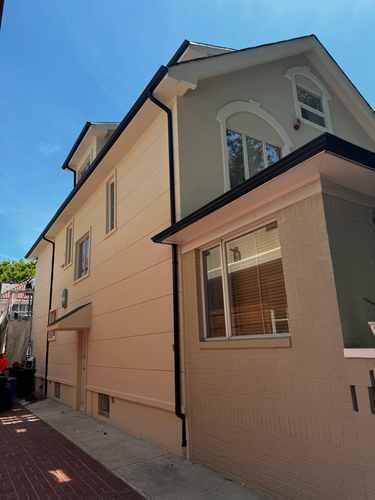
Riverdale and Fieldston are detached houses on real lots, many of them Tudor revival and colonial from the 1920s and 1930s, with complex rooflines, multiple valleys and in a good number of cases original slate. Slate commonly outlasts the nails and the flashing around it by decades, so a slate roof that looks finished is very often a flashing and fastener job rather than a replacement. We assess the slate separately from the metal before quoting, because the gap between those two answers is tens of thousands of dollars.
The Grand Concourse corridor and Mott Haven are pre war apartment buildings: large flat roofs, parapets on all sides, bulkheads, and Art Deco detail at the cornice line worth preserving. On those the parapet is where we find more water entry than anywhere else, and a roof replacement that stops at the edge of the membrane leaves the actual problem untouched.
Throgs Neck, Country Club and City Island are waterfront. Salt air breaks down a roof surface years earlier than it does inland, wind driven rain off the water finds openings a sheltered roof never gets tested on, and we specify material rated for that exposure rather than treating those blocks like the rest of the borough.
One practical advantage across most of the Bronx: outside the dense Concourse and Fordham blocks there is usually driveway or street space to stage material and a dumpster. That lowers the mobilization cost against the same job in Manhattan and lets us run a larger crew.
What We Get Called For Most
Parapet and coping on pre war buildings
Cracked coping and open joints put water straight into the top of the wall. It surfaces two floors below, well away from the entry point.
Slate flashing, not slate replacement
On Riverdale slate the fasteners and the metal fail long before the stone does. Replacing a sound slate roof is a common and expensive mistake.
Salt exposure on the waterfront
Throgs Neck and City Island need a specification the rest of the borough does not, and using the inland product there is how a roof looks tired in five years.
Rear extensions and additions
The junction where an addition meets the original roof is rarely flashed well, and it is a frequent source of leaks that appear nowhere near the joint.
Hillside drainage in Riverdale
Steep lots move water against the back and sides of houses, and the roof drainage has to be routed with that in mind.
Frequently Asked: The Bronx Roofing
How much does roof work cost in the Bronx?
Flat roof replacement runs $12 to $22 per square foot including tear off and insulation. A full shingle replacement on a detached Riverdale or Throgs Neck house typically lands between $11,000 and $30,000. Slate work is quoted per job because it depends entirely on how much of the slate is still sound. Staging is easier here than in Manhattan, which keeps the rate below what the same job costs there.
My slate roof is leaking. Does the whole thing need replacing?
Usually not. Slate regularly outlasts the nails and the flashing around it by decades, so a slate roof that looks finished is very often a flashing and fastener job. We assess the slate itself separately from the metal and the nails, because the difference between those two answers is tens of thousands of dollars and far too many Riverdale roofs get replaced when they needed repointing of the metal.
Does being on the water in Throgs Neck change anything?
Yes, and it should change the specification. Salt air breaks down a roof surface years earlier than it does inland and wind driven rain off open water finds openings a sheltered roof never gets tested on. On waterfront blocks we specify material rated for that exposure and seal every penetration more carefully. Two miles inland that premium is unnecessary and we will say so.
Do you work on apartment buildings on the Grand Concourse?
Yes. That is building scale work with a managing agent, a certificate of insurance naming the right entities, controlled roof access and restricted hours. On pre war Concourse buildings the parapet is almost always where the water is getting in, so we treat the coping, the joints and the roof to wall transition as one detail rather than three small repairs.
Can you handle Art Deco cornice detail?
Yes. Running cornices, banding and cast detail can be rebuilt in place, and where a profile is missing entirely we pull a template from an intact section of the same building. What we will not do is flatten the detail to save labour, which has already happened to a lot of Concourse buildings and is very expensive to reverse.