A roof leak stops when the rain stops, not when the hole closes. MLM Construction Group has opened Brooklyn roofs 4 months after a stain dried and found the deck still soaked. Free inspection at (516) 713-9199.
The Leak Did Not Stop. The Rain Did
It rained hard for two days. Water came through the top floor ceiling, you put a bucket down, and you spent an evening looking up at a spreading brown ring and working out who to call.
Then the weather turned. The drip slowed, then stopped. A week later the stain is pale and dry at the edges. Nothing has dripped since.
Almost everyone reads that as the problem solving itself. It is worth being blunt about this, because it is the single most expensive misreading we see in Brooklyn. A leak needs two things: an opening and water. Take away the water and the dripping stops immediately. The opening has not changed at all. It is the same size it was during the storm, in the same place, and it will behave exactly the same way on the next rain that matches the conditions of the first one.
The ceiling drying out is not the roof healing. It is the room doing what rooms do.
Why It Leaks in One Storm and Not the Next
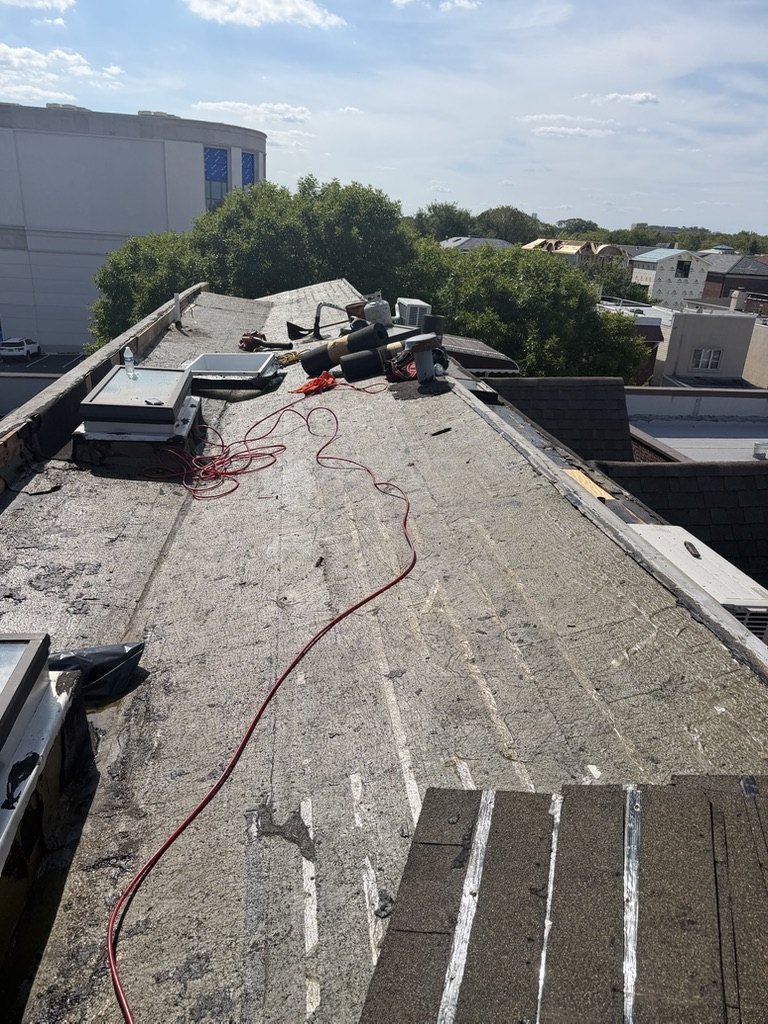
This is the part that makes people doubt themselves, and it has a straightforward explanation. Most entry points on a Brooklyn roof are conditional. They need a particular situation before they pass water, and ordinary rain does not produce it.
Wind direction. Flashing that handles rain falling straight down can be defeated by the same rain driven sideways. A nor'easter pushing water at a wall for six hours gets behind a counter flashing that has shrugged off every vertical shower since April. Change the wind and the roof is watertight again. This is the most common reason a leak looks random, and it is covered in more depth in why flashing is where most roofs actually leak.
Rain intensity, not rain total. On a flat roof, water has to build above a seam before it finds the gap. Half an inch over eight hours drains away. The same half inch in forty minutes ponds, and depth is what forces water through a horizontal joint. See standing water on a flat roof for what that depth does over time.
Debris that moves. In October a drain packs with wet leaves and holds water across the whole roof. The next windy day shifts the mat, the roof drains, and the leak disappears without anyone touching it. Nothing was repaired. The leaves moved. Clogged drains in leaf season cause more autumn leaks here than failed membrane does.
The water found somewhere else to go. The one people never consider. Water entering the roof travels along the top of the ceiling, down a rafter, across a joist, until it reaches a low point and drips. If that path shifts slightly, the drip moves to a different room, or into a wall cavity where you will not see it for a year. The leak did not stop. It stopped being visible.
What Carries On After the Drip Ends
The ceiling is the last thing to get wet and the first thing to dry, because it is the only surface with moving air on one side. Everything above it is sealed between insulation below and roofing above, and it dries at a completely different rate.
| Layer | How it dries | What happens while it stays wet |
|---|---|---|
| Plaster or drywall ceiling | Days, into room air | Stain fades. Looks resolved. |
| Insulation | Weeks to months, or never | Stays compressed, loses most of its R value, top floor gets cold |
| Roof deck and framing | Months, no airflow | Above roughly 20 percent moisture content, wood rot can establish |
| Fasteners and metal | Does not dry out on its own | Nails and straps corrode, grip weakens |
None of that produces a sign in the room below. The ceiling looks fine for the entire time it is happening. That is the whole problem with waiting for the stain to come back as your signal.
The Pencil Test
You do not need anyone at the house to get a real answer. You need a pencil and some patience.
Draw a line around the outside edge of the stain, following it exactly. Write the date on the ceiling next to the line. Then leave it alone and wait for weather.
- Stain grows past your line after a heavy rain. Water is still coming in. The entry point is live and you have an answer.
- Stain stays inside the line through two or three proper soakings. The entry may have been conditional. The deck above is still wet and still worth looking at, but there is no emergency.
- A new stain appears somewhere else. Worst of the three. The water is traveling and finding new exits, which means more of the structure is wet than you thought.
- Stain stays put but the ceiling feels cool or soft to the touch. Something above it is holding water. Do not wait on this one.
Two weeks of October weather in Brooklyn is normally enough to settle it. The pencil costs nothing and it beats guessing.
One honest exception. Not every ceiling stain is a roof leak. Warm damp air from the house condensing on cold framing produces staining that looks identical and behaves seasonally, appearing in cold weather and vanishing in mild weather with no rain involved at all. If your stain tracks the temperature rather than the rain, read attic condensation that gets mistaken for a leak before calling anybody. We would rather you worked that out yourself than paid for a roof repair you did not need.
Why October Rather Than March
There is a practical reason not to sit on this through the winter, and it is about cost rather than alarm.
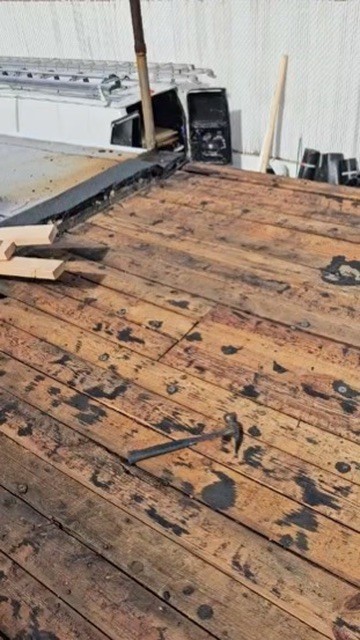
Water held inside a deck freezes. Freezing water expands, it opens the grain of the board and widens whatever gap let it in, and then it thaws and does it again. Brooklyn gives you that cycle dozens of times between December and March. A gap that would have taken a patch in October is a bigger gap by February, through a surface that has been soaked and refrozen all winter.
The work itself also changes. Cold weather shortens the roofing window, some materials will not bond properly below a certain temperature, and a tear off in January is slower and more expensive than the same tear off in autumn. We went through the detail in tearing off a roof in cold weather.
The honest summary is this. A conditional leak found in October is usually a small, cheap, targeted repair. The same leak found in March is often a section of deck.
What We Do When We Come Out
A dry stain makes the job harder, not easier, because there is no live drip to follow. So we work backwards from the evidence.
We photograph the stain and its position relative to the structure above. We go into the roof space where there is one and read moisture in the deck, which tells us whether this is recent or long running. On the roof we look at the things that leak conditionally rather than constantly: flashing laps, the parapet and its coping, drains and scuppers, vent penetrations and anywhere two materials meet. Then we tell you plainly whether we found something, and if we did not find it, we say that too and tell you what to watch for.
The inspection is free and it carries no obligation. If your answer is that the drain was blocked and now is not, that is a perfectly good outcome and it costs you nothing to hear it.
Frequently Asked Questions
My roof leak stopped by itself. Is it fixed?
No. A leak stops when the water supply stops, not when the hole closes. The rain ended, the roof surface dried, and the ceiling stain dried with it. Nothing about the roof changed. The same opening is still there and it will pass water again on the next rain that matches the conditions that caused the first one.
Why did the stain on my ceiling dry up and go lighter?
Plaster and drywall hold water and then release it into the room air, so the surface goes pale as it dries. The color fading tells you the surface is dry. It says nothing about the roof deck, the insulation or the framing above it, which dry far more slowly because no air moves across them.
How do I tell if my roof is still leaking?
Draw a pencil line around the outside edge of the stain and write the date on the ceiling next to it. Leave it. If the stain grows past your line after the next heavy rain, water is still coming in. If it stays inside the line through two or three soakings, the entry point may have been a one off, though the deck above it is still wet.
What is happening inside the roof after the leak stops?
The deck stays wet long after the ceiling looks dry because there is insulation on one side and roofing on the other, so almost no air reaches it. Wet wood above about twenty percent moisture content supports rot. Wet insulation stays compressed and loses most of its value. Both continue with no visible sign in the room below.
Why does a roof leak only happen in some storms and not others?
Because most entry points need a specific condition. Wind driven rain from one direction gets behind flashing that handles vertical rain without trouble. Ponding needs enough rain in a short enough time to pool above a seam. A blocked drain needs the leaves to be wet enough to seal. Change the conditions and the same roof stays dry.
Can I wait until spring to deal with it?
It is the most expensive way to handle it. Water sitting in a deck through the winter freezes and expands, which opens the fibres and widens the original gap. A repair that is a small patch in October regularly turns into deck replacement by March, and cold weather roofing costs more and has a shorter working window.
Free Inspection on a Leak That Already Stopped
We find conditional leaks for a living, and a dry stain is still worth reading. We check the deck for moisture, photograph the flashing, drains and parapet, and tell you straight whether there is a live problem or not. Brooklyn, Queens, Manhattan, the Bronx, Staten Island and Nassau County.
📞 (516) 713-9199 Get Free Estimate